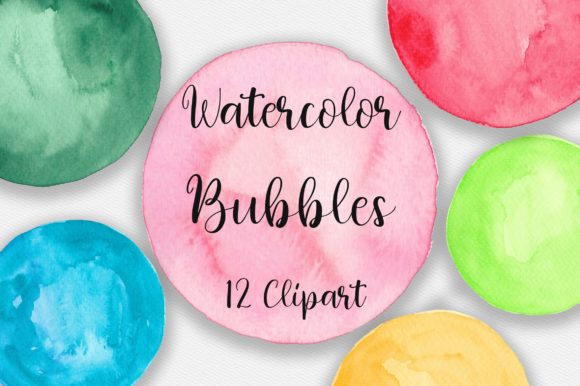
Watercolor Bubbles Clipart: A Designer Review
As a designer who has spent years translating digital art into tangible thread, I approach every new asset with a critical eye. When I first opened the file for Watercolor Bubbles Clipart, my immediate reaction was to assess its potential as a machine embroidery design. This piece falls squarely into the Backgrounds category, which often presents unique challenges in stitching. The visual personality here is soft, whimsical, and fluid, mimicking the organic bleed of watercolor paint. It feels like a breath of fresh air compared to the rigid geometric patterns that dominate many commercial collections. However, the real test lies not in how it looks on a screen, but in how it translates when the needle hits the fabric.
The Mood and Visual Translation
The charm of Watercolor Bubbles Clipart lies in its dreamy aesthetic. It creates an atmosphere of lightness and playfulness, making it an ideal candidate for projects requiring a gentle touch. In a digital preview, the gradients look seamless, but in the world of thread, we must think about fill stitch density and color blending. To achieve that true watercolor effect, this design relies heavily on how well the software handles underlay and top layering. If you are planning to use this for a custom apparel project, such as a baby onesie or a nursery pillow cover, the soft edges can add a sophisticated, handmade feel that mass-produced items lack.
However, achieving that "painterly" look requires careful selection of thread colors. You cannot simply rely on a single shade; you need to layer pastels or use variegated threads to mimic the depth of the original clipart. The bubbles themselves are irregular, which is perfect for breaking up the monotony of standard shapes. This makes the design highly versatile for creating a backdrop for monograms or small motifs without overwhelming the main subject.
A Real-World Project Scenario
Let’s walk through a specific scenario where I would deploy this asset. Imagine I am preparing a limited-run collection of tote bags for a local boutique client. The brief calls for something cheerful yet elegant, suitable for spring or summer. I decide to use Watercolor Bubbles Clipart as the primary background element on a natural canvas tote bag. The goal is to create a tote bag design that feels artisanal rather than industrial.
In this context, the design shines. The irregular bubbles provide enough texture to catch the light, adding dimension to the flat canvas. I envision placing a simple script font over the bubbles, perhaps reading "Bloom" or "Dream." Because the background is busy but soft, it allows the text to pop if the contrast is managed correctly. For an Etsy seller or a small shop owner, this type of product has high perceived value. Customers love items that look hand-painted, and this embroidery technique can replicate that effect efficiently once the digitizing is dialed in.
Conversely, if I were attempting to use this same design on a structured sweatshirt embroidery project, I would be more cautious. Sweatshirts have a fuzzy nap that can obscure fine details. The delicate transitions in the watercolor style might get lost in the loop pile of the fleece. Here, the design might work better as a smaller accent on the chest pocket rather than a large back print, ensuring the stitch density remains visible against the textured fabric.
Navigating Fabric and Hoop Challenges
While Watercolor Bubbles Clipart is visually appealing, it demands respect for the medium. One of the biggest pitfalls in using complex backgrounds is the hoop size. If the design is too large for your hoop, you risk shifting the registration between the bubble layers, ruining the smooth gradient effect. Always check the dimensions before committing to a project. If you are working with a small 4x4 inch hoop, this design might need to be scaled down significantly, which could compromise the integrity of the smallest bubbles.
Fabric choice is equally critical. On thin or stretchy fabrics like jersey knit, the sheer volume of stitches required to fill these bubble shapes can cause puckering. To mitigate this, you must use a heavy-duty stabilizer and potentially reduce the stitch count slightly to maintain fabric drape. Similarly, on dark fabrics, the light pastel tones typical of watercolor designs require a white underlay to prevent the background color from showing through. Without proper underlay, the vibrant, airy feel of the design will turn muddy and dull.
Curved surfaces present another hurdle. If you are considering this for a cap or a curved patch, the distortion of the bubbles along the curve can make the design look warped. The organic nature of the bubbles helps hide minor distortions, but extreme curves should be avoided. It is best suited for flat surfaces like kitchen towels, aprons, or flat patches where the geometry remains consistent.
Practical Notes for Designers and Makers
Before you purchase or integrate Watercolor Bubbles Clipart into your workflow, consider these practical steps to ensure professional results:
- Test on Scrap Fabric: Never skip the test run. Stitch the design on a scrap piece of the actual fabric you intend to use. Check for puckering, thread breaks, and color accuracy.
- Review Stitch Density: Look closely at the dense areas where bubbles overlap. If the density is too high, the fabric may become stiff. Adjust the settings in your embroidery software if necessary.
- Check Color Contrast: Ensure the thread colors you select stand out against the background fabric. Test the design in black and white mockups to see if the value differences are clear.
- Inspect Small Details: Zoom in on the smallest bubbles. If they are too tiny, they may disappear during stitching or cause thread jams. You may need to simplify the smallest elements.
- Verify Licensing: As a digital product seller or business owner, confirm the license terms. Can you sell finished goods? Are there restrictions on the number of items you can produce?
- Stabilizer Selection: Use tear-away stabilizers for woven fabrics and cut-away for knits to support the weight of the fill stitches.
Impact on Brand and Customer Trust
Using a high-quality asset like Watercolor Bubbles Clipart elevates the overall presentation of your handmade product. It signals to the customer that you pay attention to detail and understand the nuances of embroidery. When a buyer sees a finished item with clean lines, balanced density, and a beautiful color blend, their trust in your brand increases. This is particularly important for personalized gifts and holiday embroidery projects, where emotional connection drives the sale.
For commercial embroidery clients, offering designs with this level of artistic flair sets you apart from competitors who rely on generic clipart. It allows you to charge a premium for custom work because the result looks bespoke. Whether you are creating a boutique branding piece or a craft fair exclusive, the right background can transform a simple garment into a statement piece.
Final Verdict
Watercolor Bubbles Clipart is a strong addition to any designer's library, provided it is used with intention and technical skill. It excels in projects that benefit from a soft, artistic touch, such as baby items, home decor, and lightweight apparel. However, it requires careful management of stitch density, stabilizer choice, and fabric selection to avoid common pitfalls. By testing thoroughly and respecting the limitations of the medium, you can create stunning finished products that delight customers and enhance your reputation as a skilled creator. Remember, the magic isn't just in the file; it's in how you bring it to life with thread.